DO MORE WITH OUR APP

OR

2022.05.24
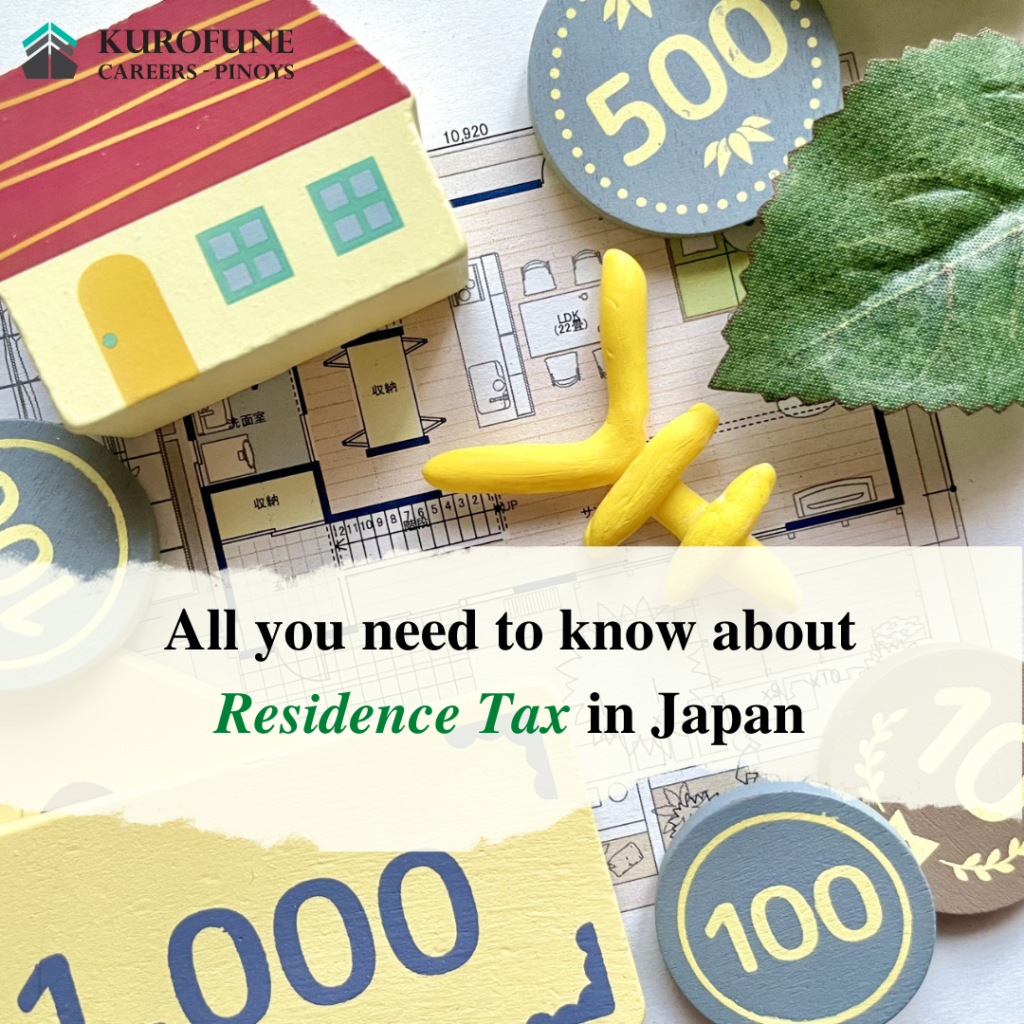
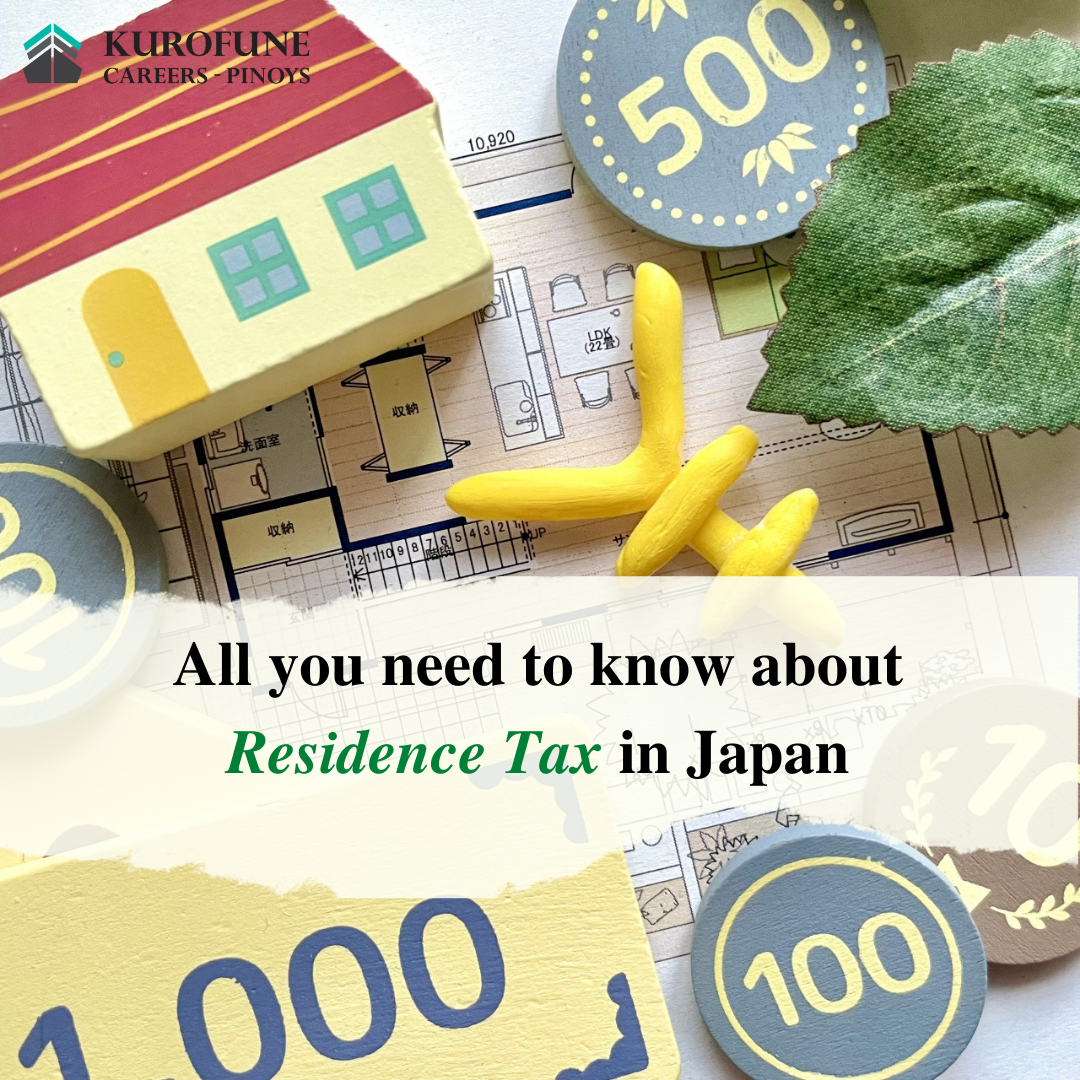
“When in Rome, do as the Romans do” if you are a foreigner in Japan. Therefore, you will have to comply with the regulations of this country, in which paying residency tax is the first thing you must understand. In today’s article, we will give you more information about this tax.
What is residency tax?
Definition:
Residence tax (住民税) is the amount of money that people residing in Japan, including foreigners, must pay to the local authorities to ensure funding for the purpose of maintaining the rights of the place of residence such as welfare, security, fire prevention, waste disposal, education, disaster prevention, cultural and artistic activities, etc.
Method of paying residence tax:
There are 2 methods to pay residence tax in Japan: deducting from the salary through the company or paying directly. For official employees, the company will pay in advance to the city agency and deduct a little from their monthly salaries. Conversely, for students or part-timers, this tax will be calculated on an annual basis and a payment notice will be sent to each individual in June.
You can pay the whole amount at once or split it up 4 times a year. Furthermore, you can pay residence tax through a convenience store, post office or bank.
Regulations on paying resident tax in Japan for foreigners:
How to calculate residence tax:
Residence tax is a tax required for everyone residing in Japan (at least one year of stay) and is calculated based on individual total income during the previous one year of employment and also depends on the deduction each person can receive. Here is the specific formula:
Residence tax = [(Taxable income – deduction) x 10%] + 5500
Payment date:
As mentioned above, for official employees, the company will pay in advance and deduct monthly from salary, so it may seem that this amount is not much. For students or part-timers, the residence tax will be compounded by year, so sometimes it feels like this amount is quite large. If you can’t pay this tax at once, you can pay it 4 times with the deadlines respectively: July 2nd, August 31th, October 31th and January 31th of the following year.
Who needs to pay this tax:
People who have resided in Japan for more than one year and whose personal income exceeds 1 million yen per year despite being an international student or a foreign worker. And that means you are obligated to pay the resident tax from January 1 every year. However, when you first come to Japan, you will not have to pay this tax but from the second year, the local authority will start calculating the tax based on your income of the previous year.
Note: People who have lived here for less than a year, also known as “non-residents”, do not have to pay this tax.
Is residency tax deductible?
Residence tax can be deducted, but according to Japanese regulations, the deduction must follow the order of priority from top to bottom. And in that, the income tax that you are also obligated to pay is prioritized over the residence tax. So if you already have income tax deduction, your residence tax may not be deducted. Deductions are commonly applied in Japan such as medical expense deduction, spousal deduction, life insurance deduction, contribution deduction, etc.
What happens if you don’t pay your tax?
Tax payment reminder:
For those who have overdue the payment of resident tax within the time indicated on the payment notice, they will receive a reminder from the local tax authority. If you receive this reminder, you must promptly pay your tax immediately.
Warning letter:
If you still do not pay after receiving the tax payment reminder, the local authority will send you another type of notice called a warning letter. At this point, the level is really serious, when receiving this letter, in addition to the tax you are required to pay, you have to pay another amount of late tax payment and the longer you leave it, the more you have to pay.
For those who continue to refuse to pay taxes after receiving a warning, the tax authorities can take drastic measures such as automatically deducting money from your bank account, confiscating tax from your property, etc. Therefore, you need to pay the residence tax on time if you don’t want to get into trouble. Besides, if you receive a warning letter many times, the local government may consider deporting you from Japan.
WABISABI MEDIA ©2020 KUROFUNE

